Master the language of high-fidelity audio and advanced home cinema. Explore clear, professional definitions of acoustic concepts, AV technology, and audiophile terminology.
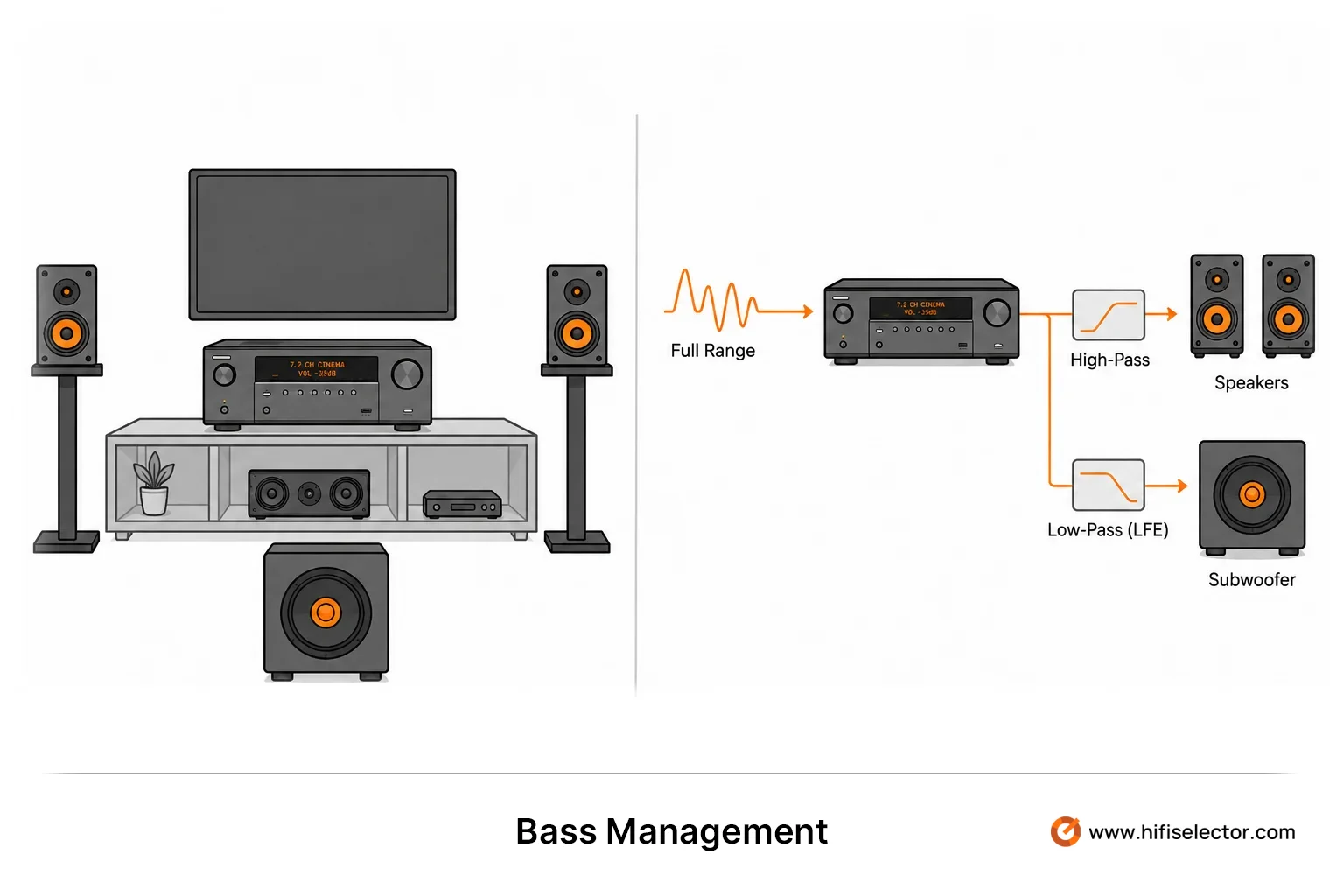
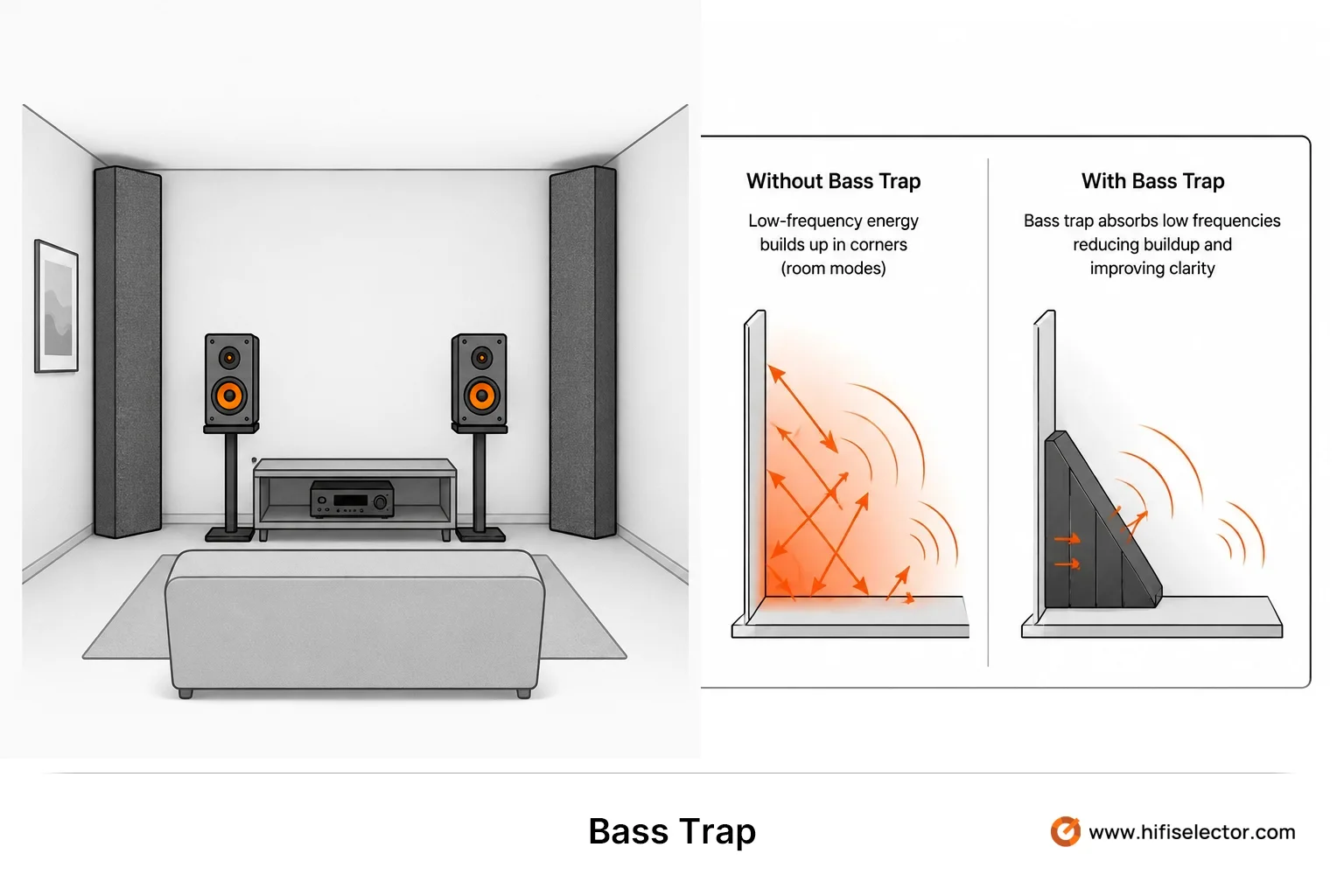
Routing and filtering that redirects low frequencies from selected channels to subwoofers using crossover settings suited to speaker capability and system layout.
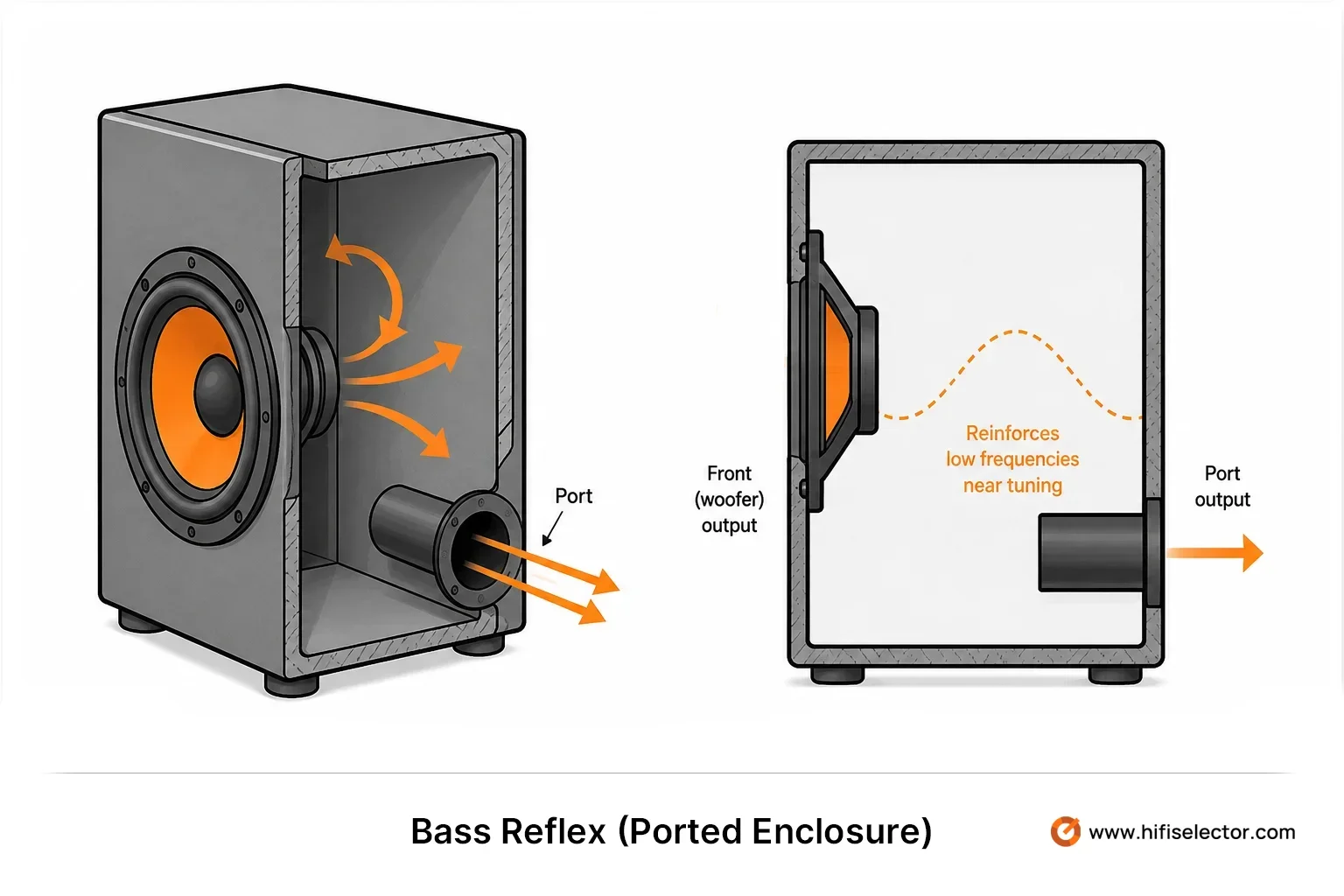
A loudspeaker enclosure using a tuned port to combine rear radiation from the woofer with its forward output, extending low-frequency efficiency around tuning.
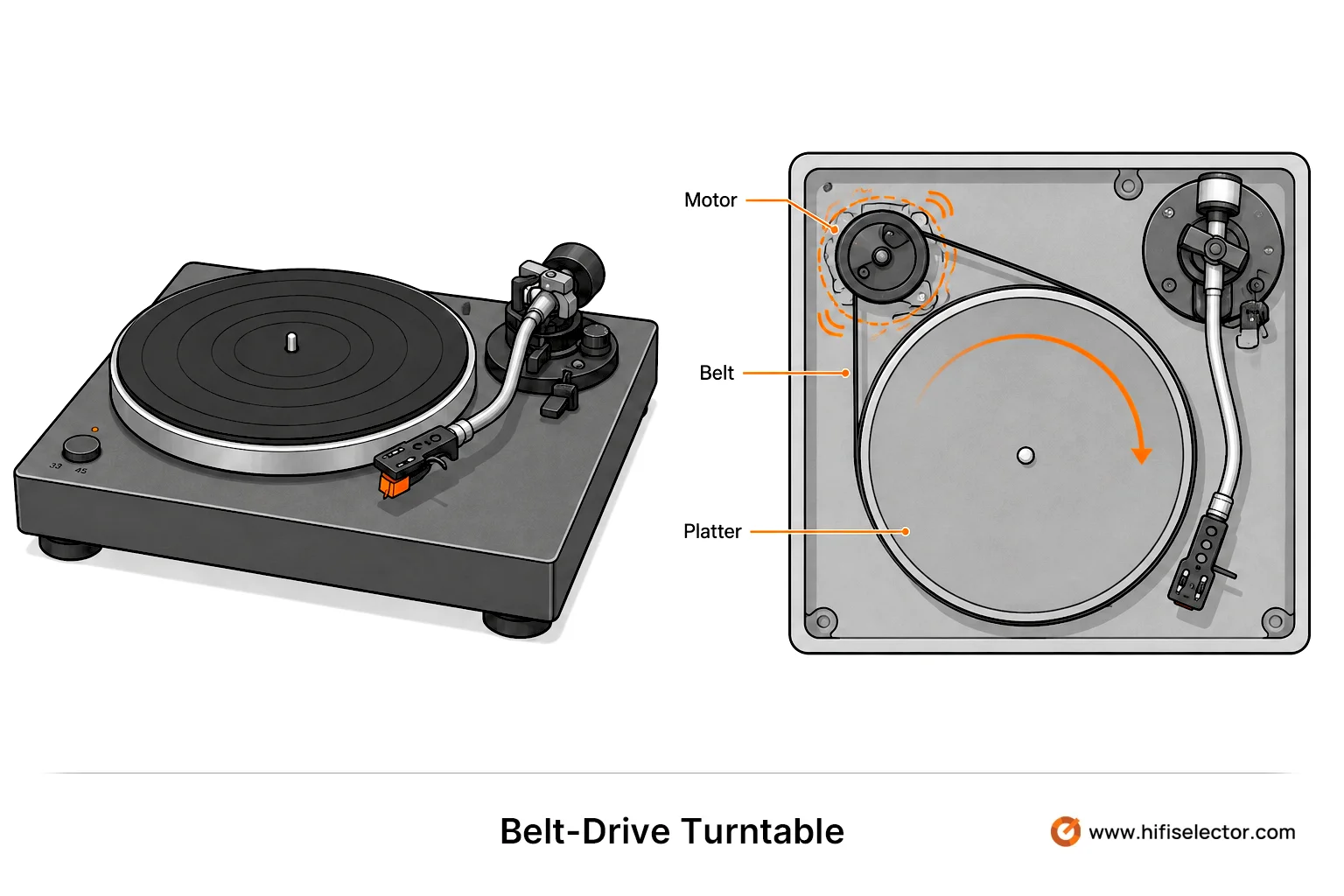
Uses an elastic belt between motor and platter, mechanically separating the motor from the record to reduce vibration while maintaining controlled rotational speed.
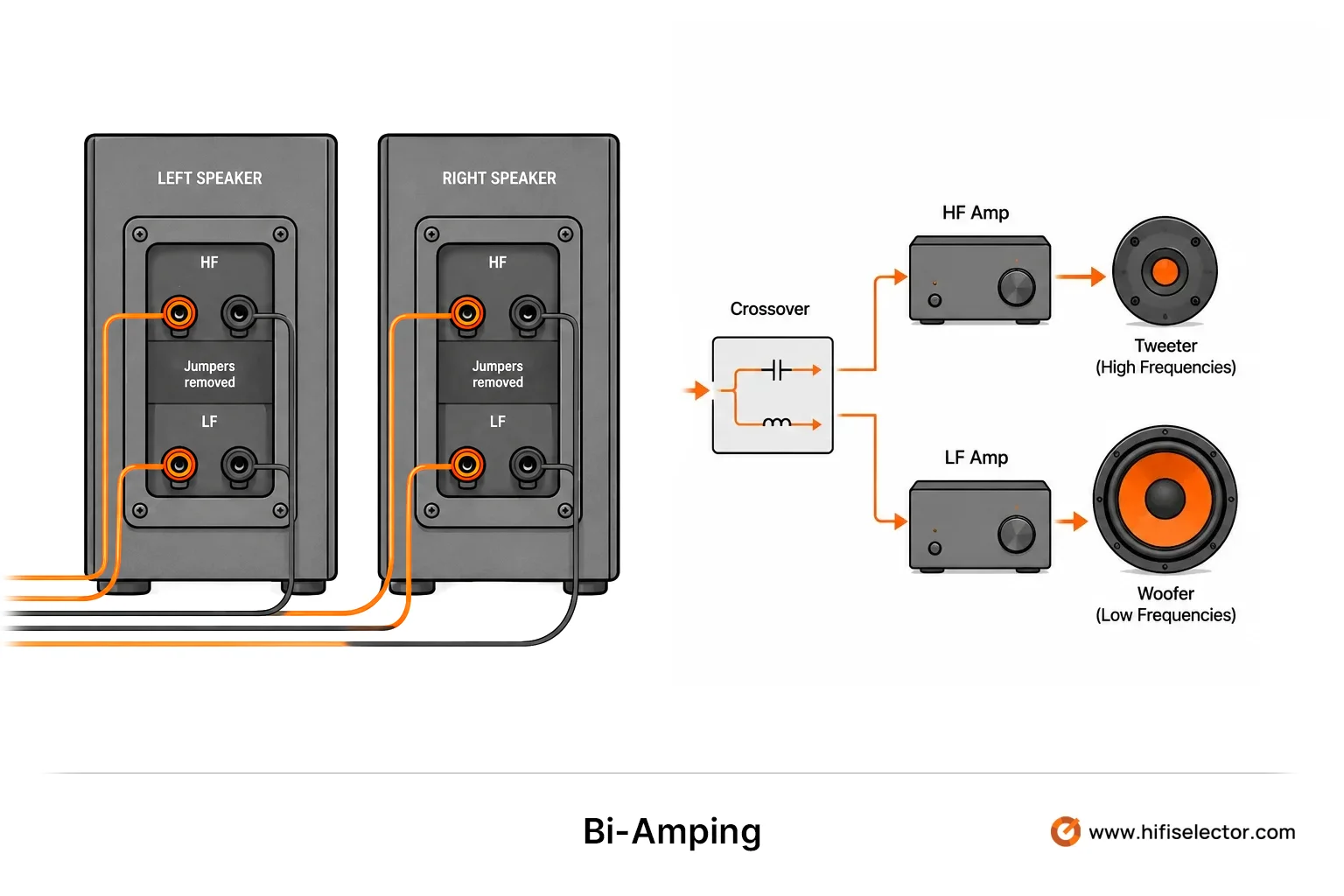
Uses separate amplifier channels for different loudspeaker frequency sections, such as bass and treble, allowing independent power delivery and potentially greater control.
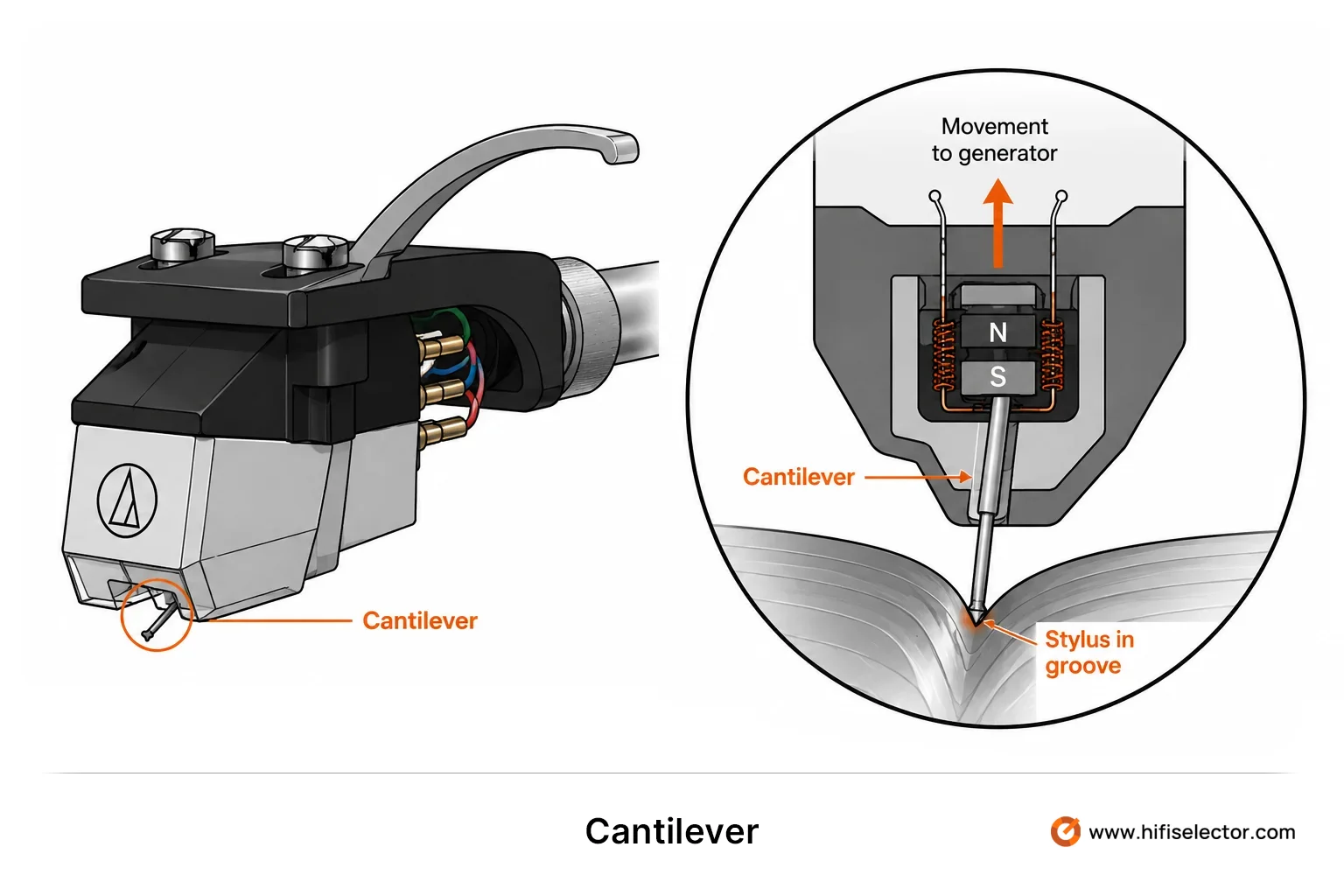
The small rod connecting a cartridge stylus to its generator mechanism, transmitting groove motion while its mass and stiffness influence tracking behavior.
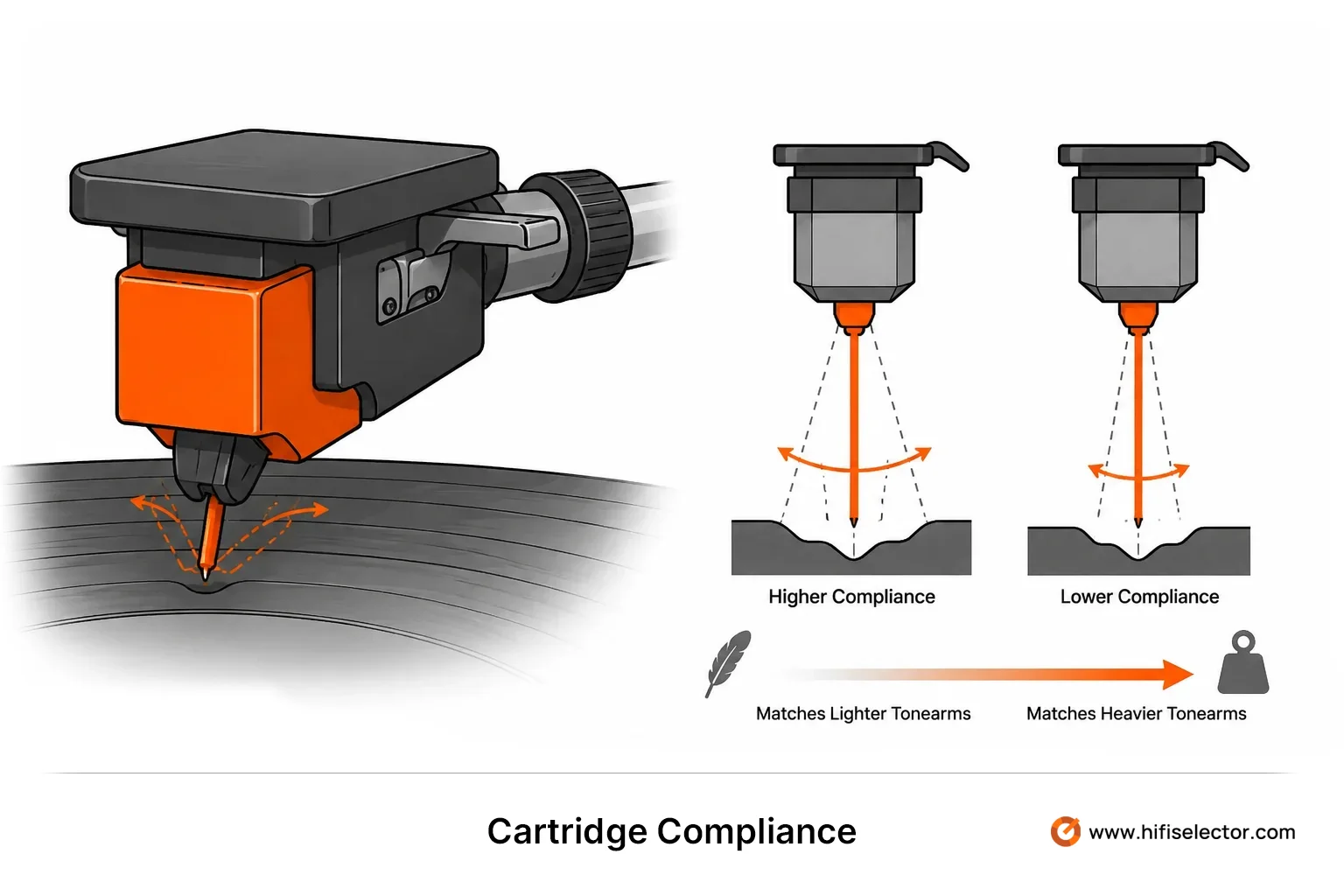
A measure of how easily a cartridge suspension deflects under force, important with tonearm effective mass for determining the arm-cartridge resonance frequency.
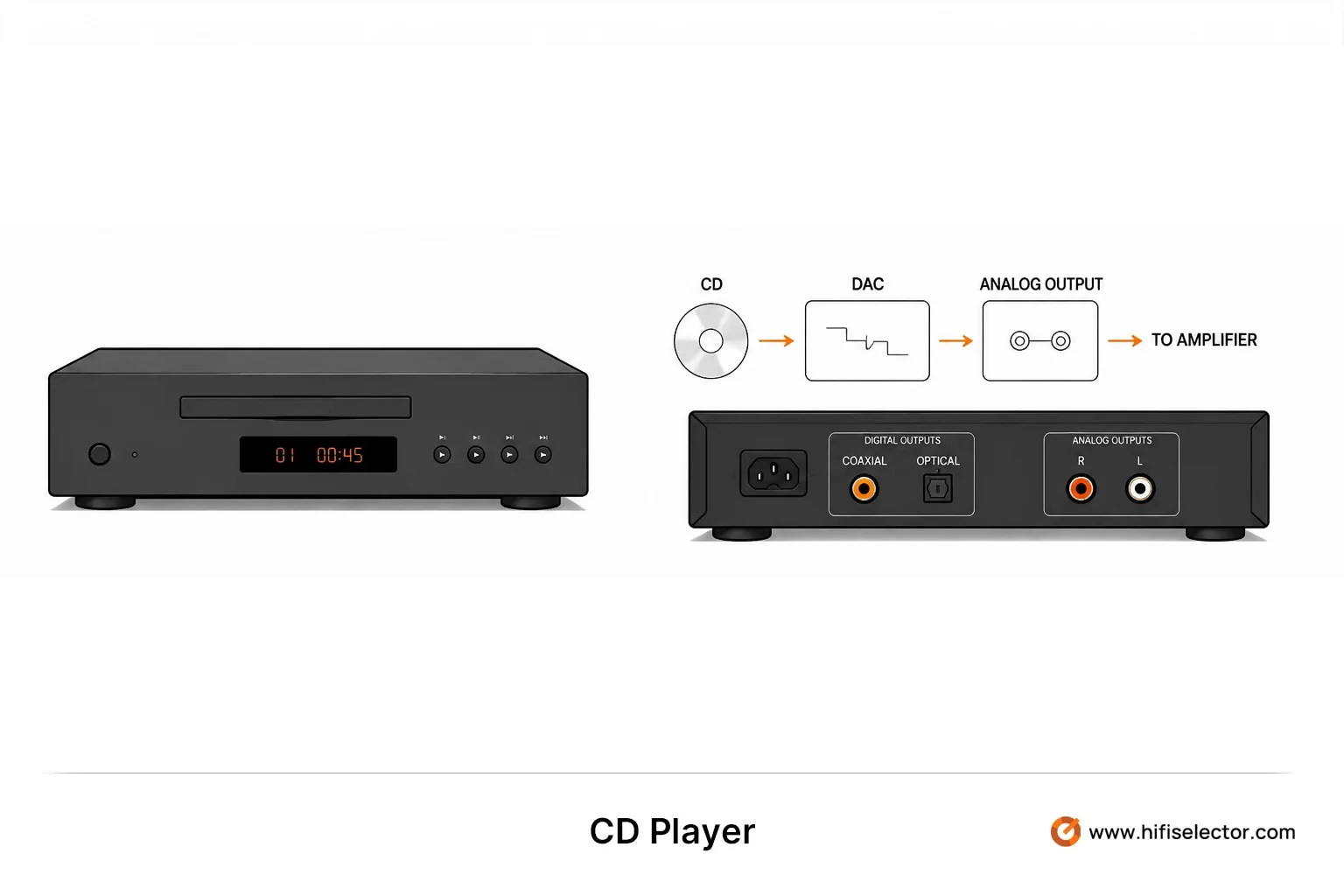
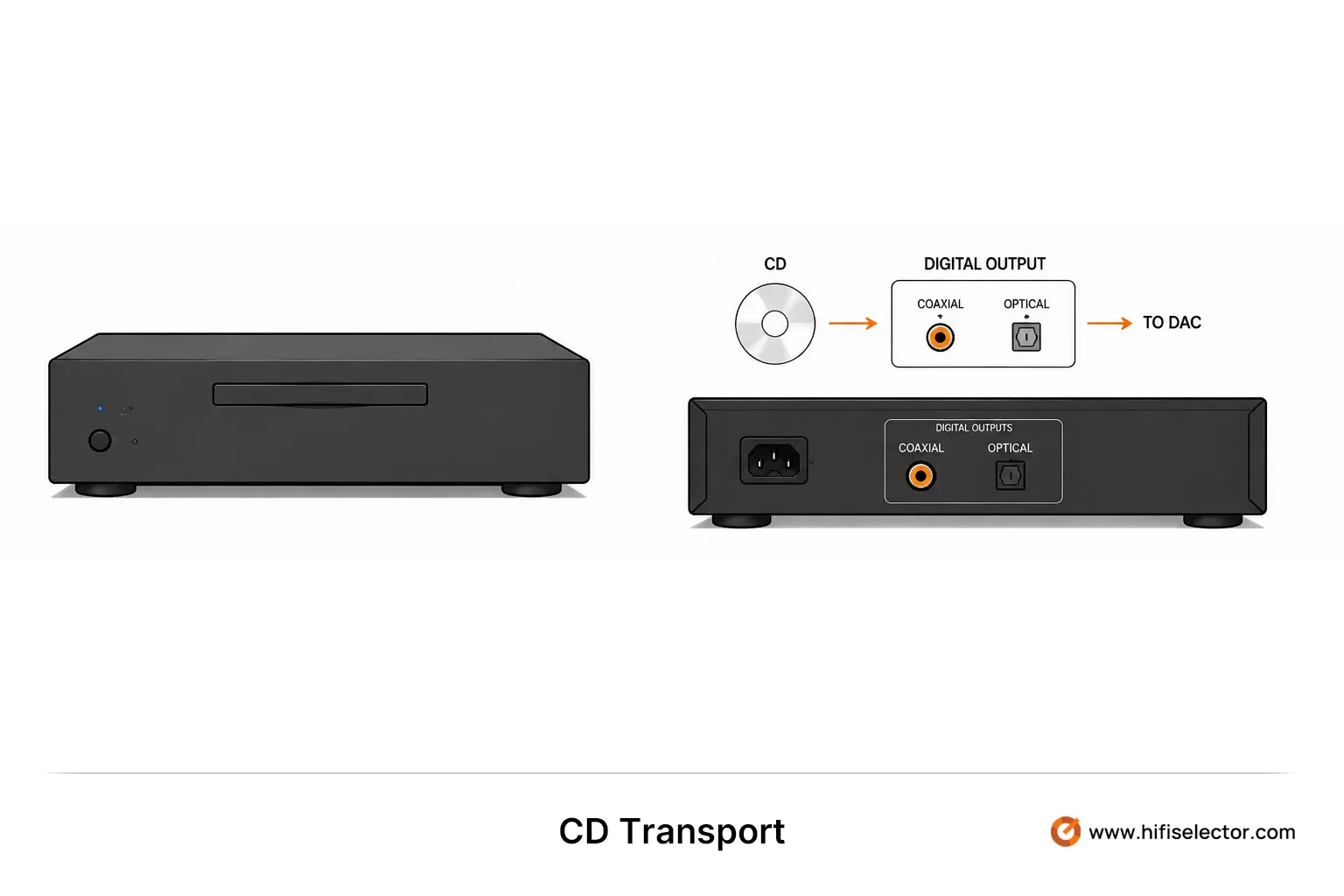
A dedicated device that extracts digital audio data from a compact disc without additional processing, enabling external DACs to deliver enhanced audio fidelity.
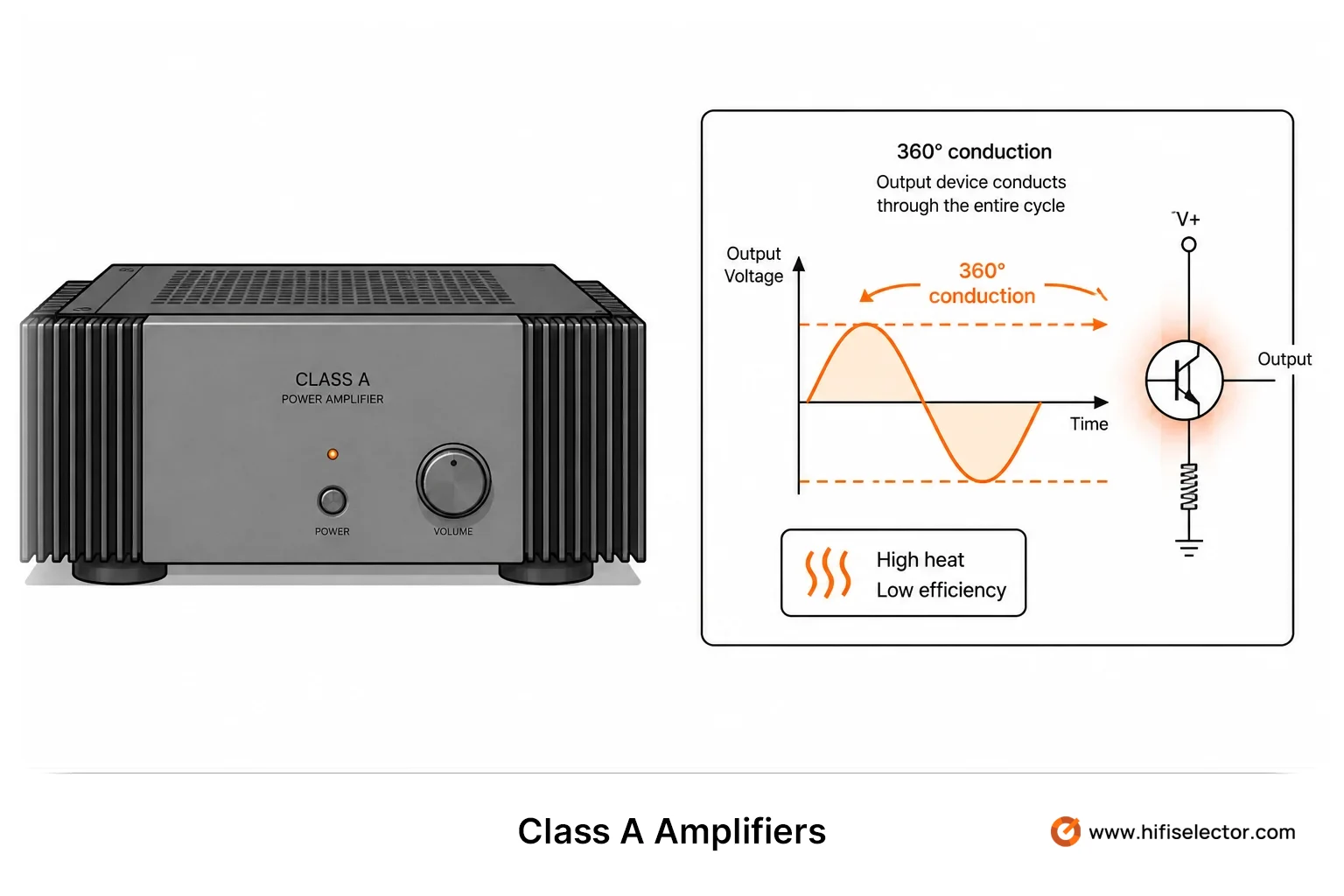
Amplifiers whose output devices conduct throughout the full signal cycle, offering simple linear operation but relatively low efficiency and substantial heat generation.
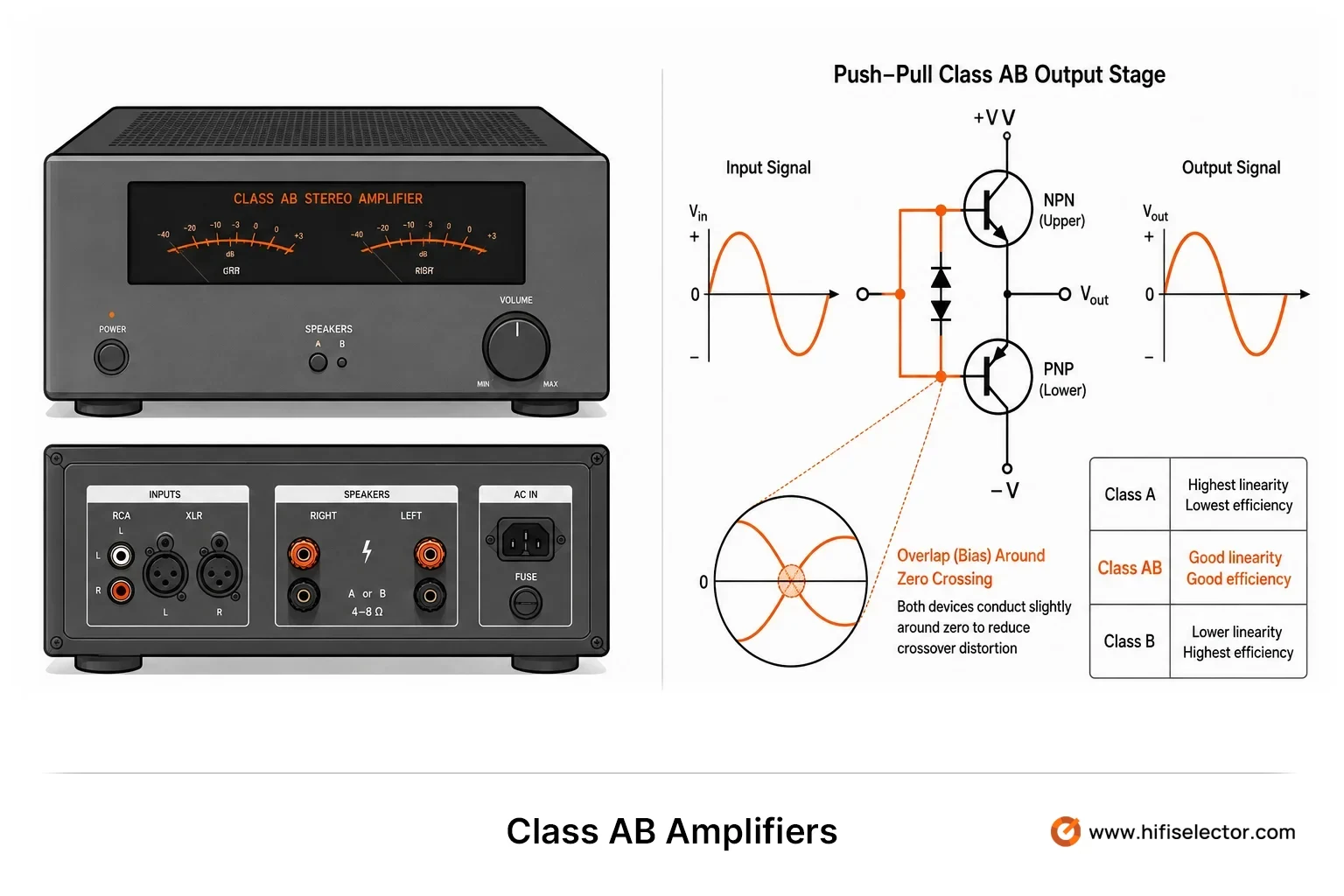
Amplifiers combining aspects of Class A and Class B operation so output devices overlap around zero crossing, balancing linearity, power, and efficiency.
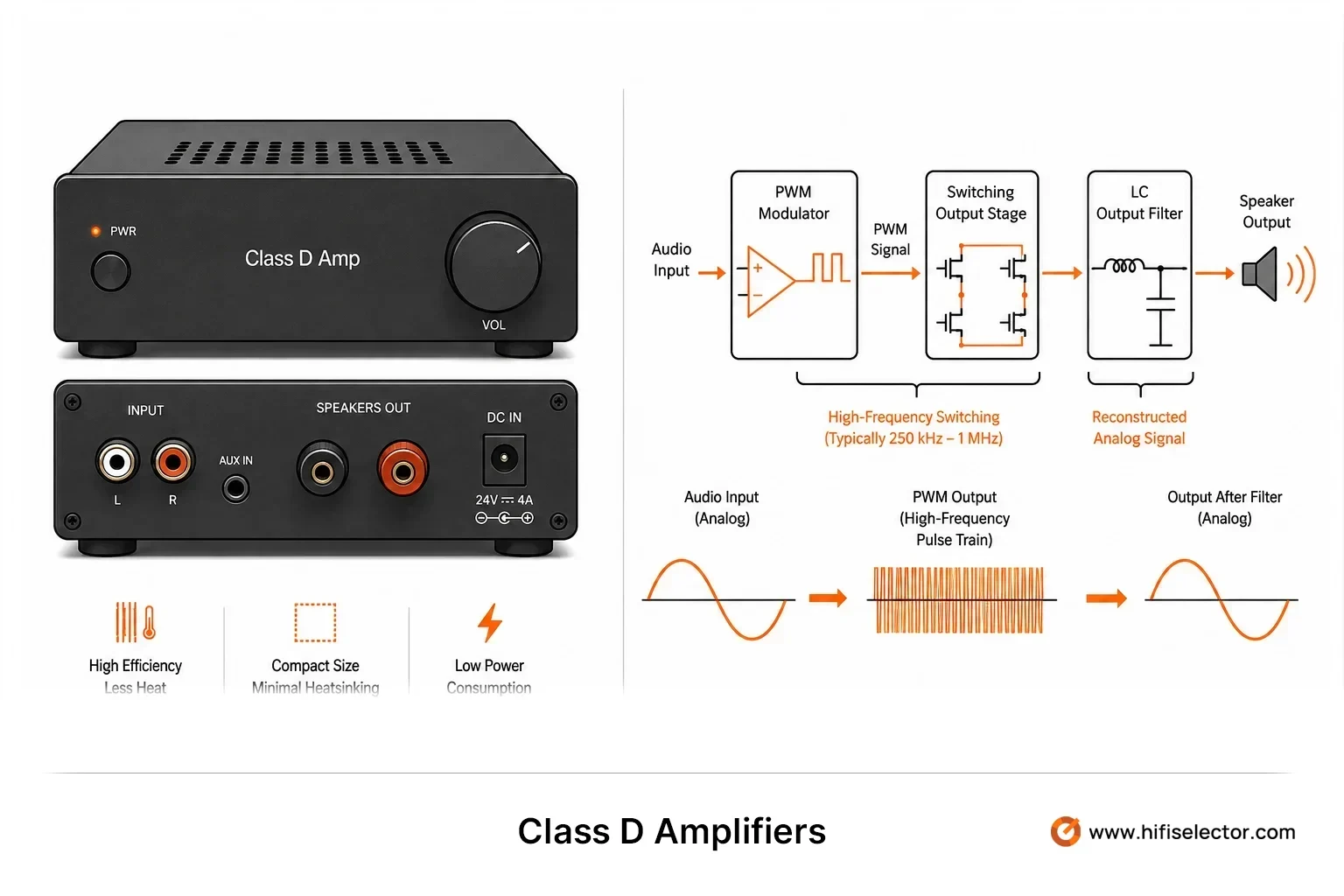
Switching amplifiers whose output devices operate mainly as high-speed switches, providing high efficiency and compact power delivery with an output reconstruction filter.
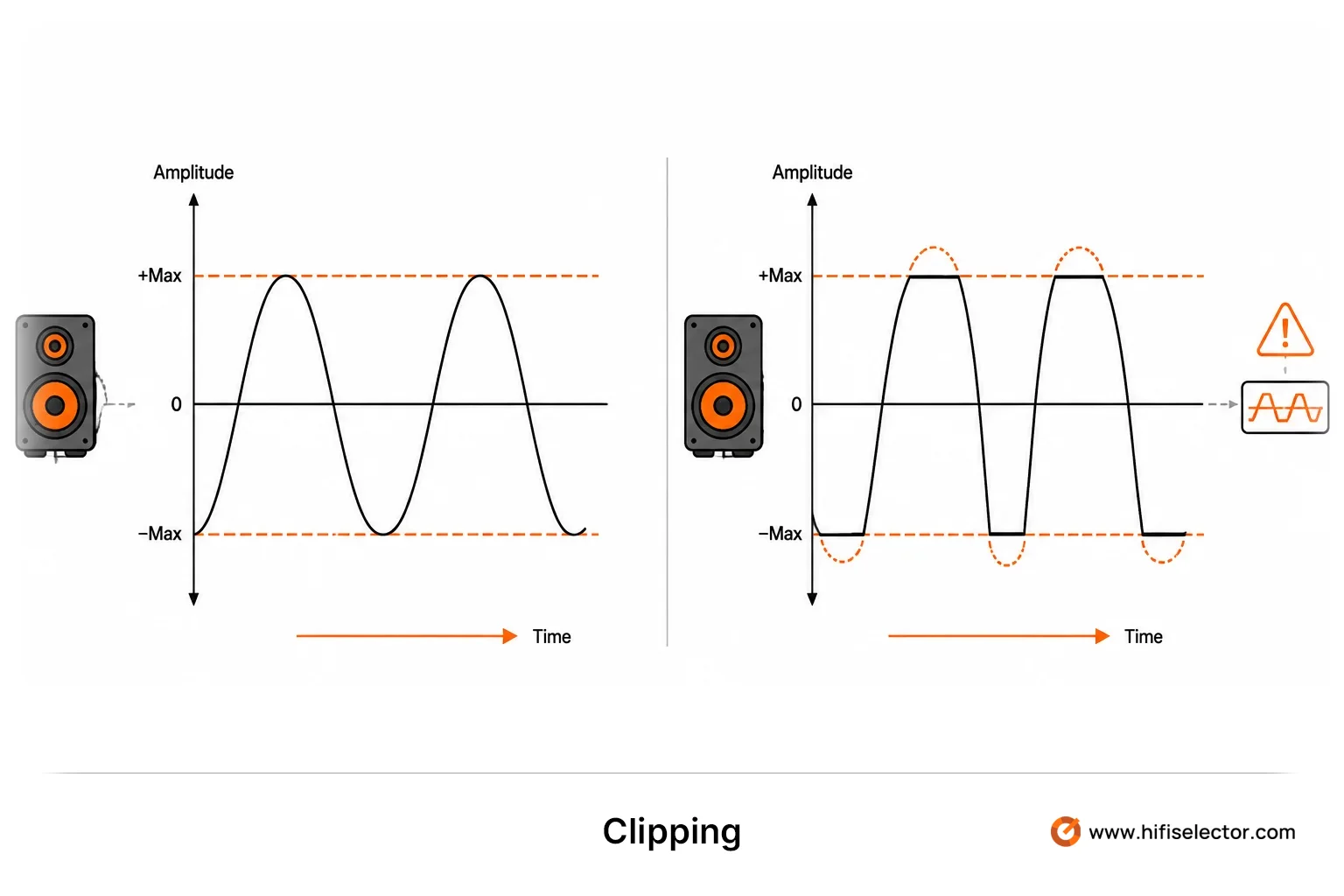
Distortion that occurs when an audio stage is asked to exceed its available voltage or current range, flattening waveform peaks and generating harmonics.